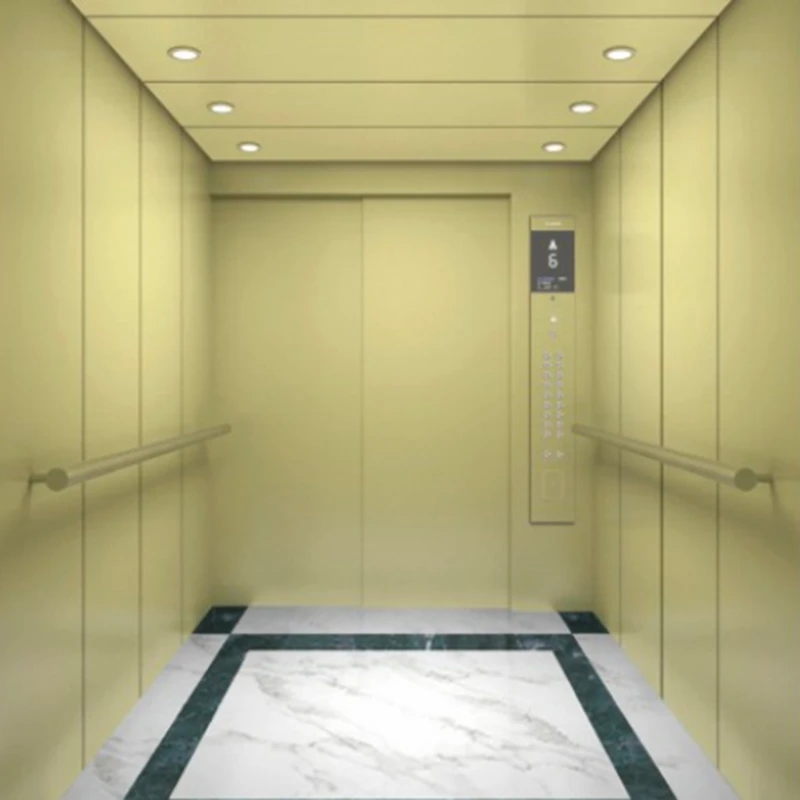
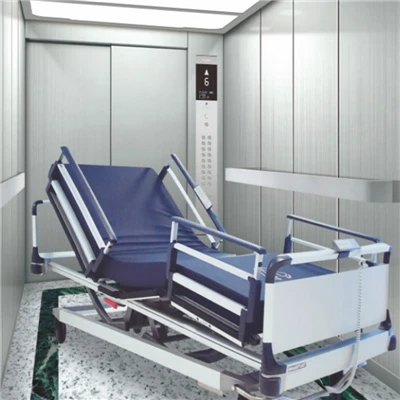
FUJIEPS Hospital Pattern Elevators are a general category of professional elevators, including bed elevators and freight elevators, among other types. Custom-engineered to meet the unique operational needs of hospitals, they feature high safety, reliability, smooth operation, and functional adaptability.
Send Inquiry
Description
Send Inquiry
Hospital Pattern Elevator
FUJIEPS Hospital Pattern Elevators are a general category of professional elevators, including bed elevators and freight elevators, among other types. Custom-engineered to meet the unique operational needs of hospitals, they feature high safety, reliability, smooth operation, and functional adaptability. These elevators provide comprehensive support for all aspects of daily hospital operations, such as patient transport and medical supplies delivery.
Product Advantages
1. Versatile Adaptability: Available in multiple configurations to suit diverse transport needs, including beds, stretchers, and supplies.
2. Comprehensive Safety Protection: Multi-layer safety systems safeguard patients, medical staff, and cargo throughout the process.
3. Smooth & Comfortable Operation: Ultra-smooth operation minimizes patient discomfort and protects fragile medical equipment.
4. Efficient & Convenient: Fast and precise floor alignment improves the overall operational efficiency of the hospital.
5. Easy Maintenance: Modular design allows for quick disassembly and replacement of key components. Equipped with a self-diagnostic system for real-time monitoring and early warning, reducing maintenance costs and ensuring stable operation.
FAQ
Q: What is the load capacity of medical elevators?
A: There is no single fixed rating for specialized hospital elevators (medical bed elevators). The standard common capacity is 1600 kg, with different load ratings corresponding to customized space applications as follows:
- 1000 kg - 1350 kg (Passenger/General Purpose): Primarily for transporting medical staff, visitors, or small hospital items; not suitable for bed transport.
- 1600 kg (Mainstream Standard): The most common standard configuration, easily accommodating standard hospital beds and accompanying personnel to meet the vast majority of daily hospital transport needs.
- 1800 kg - 2000 kg (Critical Care Use): Larger capacity and space, suitable for transporting ICU beds or patients with large emergency medical equipment.
- Approx. 400 kg (Service/Soiled Utility Elevators): Small dedicated elevators for transporting linens, clothing, medications, or waste only. Strictly prohibited for passenger use.
Q: Heavy-duty medical elevators are required to transport some extra-long and extra-tall special medical equipment. What targeted designs do medical elevators have for this scenario?
A: To address this type of demand, the cabins of some freight medical elevators can be customized with removable cabin roofs and wall panels.
When transporting ultra-tall equipment (such as large-scale vascular angiography machines), the corresponding cabin roof panels can be removed to increase vertical space; when transporting ultra-long equipment (such as extra-long rehabilitation training runways), part of the cabin wall panels can be removed to expand horizontal passage space.
In addition, the elevator control system is preset with a "Large Equipment Mode". In this mode, the running speed is appropriately reduced and the door opening time is extended to ensure that special equipment can enter and exit the elevator safely and completely.
Q: Given their frequent use in hospitals, how do comprehensive medical elevators minimize wear on mechanical components and extend their service life?
A: The elevator's core mechanical components, such as the traction machine and guide rails, are manufactured from high-quality, wear-resistant special alloys. It is also equipped with an advanced automatic lubrication system, which intelligently adjusts lubrication based on operating mileage and load, and delivers oil at regular intervals to ensure all moving joints are properly lubricated.
In addition, the operation control system integrates a built-in wear monitoring algorithm that tracks component wear in real time, triggers timely alarms when abnormalities are detected, and enables proactive, early maintenance. A combination of these measures effectively reduces mechanical wear and extends the elevator's service life.