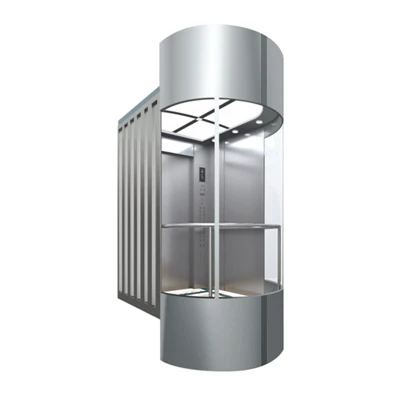
Choosing a sightseeing elevator requires comprehensive consideration of shaft space, building structure, family member needs, and budget. The core principle is "suitability" rather than "uniform standards."
First, consider the building structure and space conditions.
Is there a pre-reserved shaft?
With a pre-reserved shaft: Prioritize traction-type sightseeing elevators. They are technologically mature, operate smoothly, and have a relatively high speed (0.4–1.0 m/s), supporting 360° full-glass views.
Without a pre-reserved shaft or limited space:
If the top floor height is insufficient and a pit cannot be excavated → a screw-type elevator is recommended. It requires only 30cm of installation space, no pit is needed, and it is suitable for later installation.
For low-rise villas (≤3 floors) with low load-bearing requirements → a hydraulically driven elevator can be selected. It operates smoothly, but attention should be paid to the risk of oil leaks and subsequent maintenance costs.
Installation location: Indoor or outdoor? Indoor Installation: A steel-structured enclosed shaft with a machine-room-less design is recommended, featuring four sides of transparent glass to preserve natural light and create a more integrated visual experience.
Outdoor Installation: For spacious courtyards where a scenic view is desired, choose a round or square fully transparent sightseeing elevator, such as a traction or guide rail type, to become a highlight of the building.
For structures with good load-bearing capacity and complex terrain (such as mountain villas), consider a guide rail elevator that moves vertically along the wall, saving space.