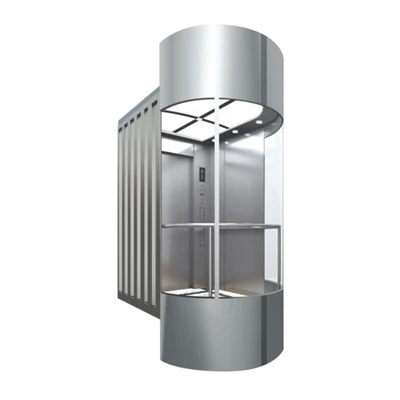
A sightseeing elevator is a special type of elevator that combines elevator technology with sightseeing functionality. Its core feature is the use of transparent or semi-transparent materials (such as tempered glass) in the car, allowing passengers to clearly view the external scenery during vertical ascent and descent, while also allowing outsiders to observe the internal operation through the car. For more product parameters of the aforementioned items, please click below.
This type of elevator not only possesses the vertical transportation function of a traditional elevator but also becomes a visual focal point in architectural spaces through its unique structural design. It is widely used in commercial complexes, hotels, office buildings, scenic observation decks, and other places where functionality and aesthetics must be balanced.
From a technical perspective, the drive system of a sightseeing elevator is not fundamentally different from that of a regular elevator, employing traction, hydraulic, or screw-type drive methods. However, it features targeted optimizations in car structure, safety protection, and decorative design. For example, the elevator car frame is typically made of high-strength aluminum alloy or stainless steel to ensure it meets safety standards while supporting the transparent glass panels. The glass panels are often laminated safety glass, offering impact resistance and UV protection, with a thickness generally not less than 12 millimeters. The interior lighting system uses soft, indirect light sources to avoid direct glare interfering with the viewing experience. Furthermore, the operating speed of sightseeing elevators is usually controlled within the range of 0.5-6 meters per second, ensuring transportation efficiency while avoiding passenger discomfort due to excessive speed.
In terms of application scenarios, the design of sightseeing elevators must be highly integrated with the overall architectural style. In commercial complexes, they are often placed in atriums or open spaces, becoming a dynamic landscape element connecting different floors. In hotel projects, sightseeing elevators can be integrated with the lobby design to create a high-end and sophisticated first impression. At scenic viewing platforms, sightseeing elevators can directly transport tourists from the foot of the mountain to the viewing platform, while also providing an experience of enjoying the natural scenery along the way. It is worth noting that the installation location of sightseeing elevators must fully consider environmental factors such as sunlight and wind pressure. For example, when installed on the exterior of high-rise buildings, reinforced guide rails and windproof devices are necessary to ensure operational stability.
From a market trend perspective, sightseeing elevators are developing towards personalized customization and intelligent features. Modern designs not only offer a variety of car shapes, including round, square, and irregular shapes, but also allow for customized lighting effects and multimedia interactive systems to match the architectural theme. For instance, some high-end projects embed touchscreens inside the cars to display real-time floor information, building history, or information about surrounding attractions; some sightseeing elevators are also equipped with intelligent sensing systems that automatically adjust the interior lighting brightness based on ambient light intensity. These innovative designs elevate sightseeing elevators from mere transportation tools into cultural carriers within architectural spaces.