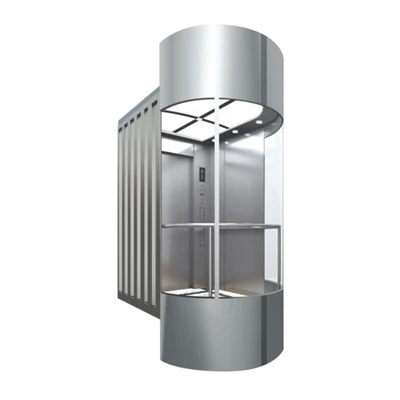
Passenger elevators operate by using a traction system driven by an electric motor. The friction between the steel wire rope and the traction sheave drives the car and counterweight up and down along the guide rails, achieving vertical passenger transport.
The core of the system is the traction drive: the electric motor drives the traction sheave through a reducer. One end of the steel wire rope is connected to the car, and the other end is connected to the counterweight. The two move in opposite directions due to the friction of the traction sheave. When the car rises, the counterweight falls, and vice versa. This design not only improves operating efficiency but also significantly reduces the power required by the electric motor.
Elevator safety is ensured by multiple devices:
Speed Governor and Safety Clamp: When the elevator exceeds its speed, the speed governor triggers the safety clamp, firmly clamping the car onto the guide rails to prevent a fall.
Buffer: Installed at the bottom of the shaft, it absorbs impact energy in extreme situations, reducing injury.
Door Lock and Light Curtain Protection: Ensures that the elevator doors automatically reopen if they encounter an obstacle during closing, preventing people from being trapped.
Furthermore, modern passenger elevators commonly employ variable frequency drive (VVVF) technology and permanent magnet synchronous traction machines to achieve smooth start-stop, energy saving, noise reduction, and precise leveling. Intelligent systems can also monitor elevator status in real time via the Internet of Things (IoT) and provide early warnings of malfunctions.