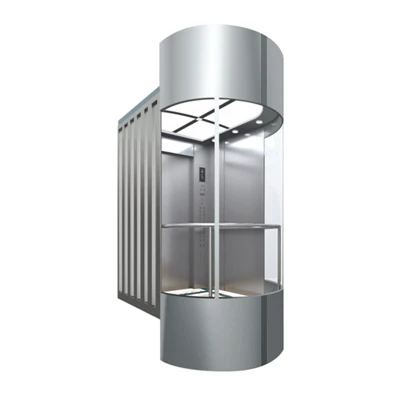
Choosing the right passenger elevator type hinges on accurately matching the building's usage scenario, passenger flow, spatial conditions, and core needs. Here is a systematic selection guide:
Define Building Type and Core Needs Different buildings have significantly different functional requirements for elevators, which should be prioritized:
Residential Buildings (Ordinary Residences, Villas, Self-built Houses)
Key Needs: Comfort, quietness, cost-effectiveness.
Recommended Type: Traction passenger elevator (low/medium speed), load capacity 320–630kg, speed 1.0–1.5 m/s.
Special Considerations: If the majority of passengers are elderly or have mobility issues, an accessible elevator can be selected, with a car width ≥ 1.1 meters to facilitate wheelchair access.
Commercial Complexes, Office Buildings
Key Needs: High transport efficiency, large load capacity, and rapid response to peak passenger flow.
Recommended Type: Medium-to-high speed traction elevator, load capacity 800–1000kg, speed 1.5–2.5 m/s, supporting group control systems to reduce waiting time.
Additional Configuration: Optional machine-room-less elevator, saving top-floor space and improving space utilization.
Hospitals, Nursing Homes
Key Requirements: Safety, smooth operation, and compatibility with hospital bed transport.
Recommended Type: Class III medical elevator (hospital bed elevator), car depth ≥ 2.4 meters, load capacity ≥ 1600kg, equipped with fire-fighting leveling and emergency power supply functions.
Additional Installations in Existing Buildings, Space-Constrained Buildings
Key Requirements: Adaptable to narrow shafts, shallow pits, and low ceiling heights.
Recommended type: small passenger elevator or machine room-less elevator, with a shaft width as low as 500–800mm and a load capacity of 250–400kg to meet basic passenger carrying needs.