Passenger elevators are mainly classified according to their drive method, speed, purpose, and structural characteristics. Different types are suitable for different building needs.
Classification by Drive Method
Traction-driven elevators: Driven by the friction between steel cables and a traction sheave, this is currently the most mainstream type, offering smooth operation and high efficiency.
Hydraulic elevators: Relying on a hydraulic system to push pistons to raise and lower the car, suitable for low-rise buildings (usually below 6 stories), offering smooth operation but slower speed.
Linear motor-driven elevators: Using a linear motor to directly drive the car, eliminating the need for steel cables, allowing multiple cars to operate in parallel, saving space, and representing the future technology direction.
Classification by Operating Speed
Low-speed elevators: Operating speed ≤ 1 m/s, commonly found in residential buildings and older communities.
Medium-speed elevators: Operating speed between 1–2 m/s, widely used in mid- to high-rise office buildings and shopping malls.
High-speed/Ultra-high-speed elevators: Operating speed > 2 m/s, even exceeding 7 m/s, suitable for skyscrapers and large commercial complexes.
Classification by Purpose and Special Design
Residential elevators: Emphasizing cost and practicality, meeting the daily travel needs of families.
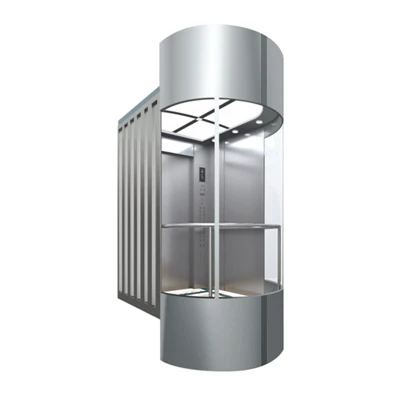
Sightseeing elevators: Featuring a transparent car or shaft, allowing passengers to enjoy external views; commonly used in shopping malls and scenic area buildings.
Hospital bed elevators (medical elevators): Designed specifically for hospitals, with spacious cars for easy bed access, smooth operation, and fire alarm linkage functionality.
Machine room-less elevators: Placing the main equipment within the shaft, saving space on the building's top floor; suitable for modern buildings with limited space.
Firefighter elevators: Equipped with fireproof, waterproof, and emergency power supply functions, for dedicated use by firefighters during fires.