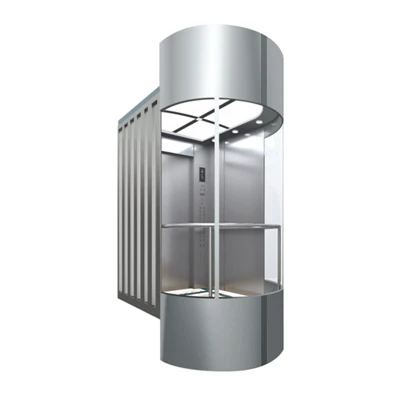
Stainless steel is the most commonly used material in passenger elevators. It is widely used in core components such as the car and door systems due to its high strength, corrosion resistance, ease of cleaning, and good aesthetics.
Why has stainless steel become the mainstream choice?
Superior overall performance
Strong corrosion resistance: Especially 304 and 316 stainless steel, which can withstand complex environments such as humidity and salt spray, extending service life.
High structural strength: Meets the safety requirements for long-term elevator operation, is impact-resistant, and not easily deformed.
Low maintenance costs: Smooth surface, easy to clean, suitable for high-frequency public spaces.
Diverse surface treatments to meet different needs
Mirror stainless steel: Enhances the sense of space, often used in modern-style elevators.
Brushed stainless steel: Matte texture, fingerprint-resistant, scratch-resistant, suitable for both residential and commercial use.
Etched/hairline finish: Adds decorative appeal, suitable for high-end locations.
Safety standards recommend that load-bearing structures such as door frames be made of metal, with stainless steel being one of the preferred choices to ensure that they do not deform over long-term use.