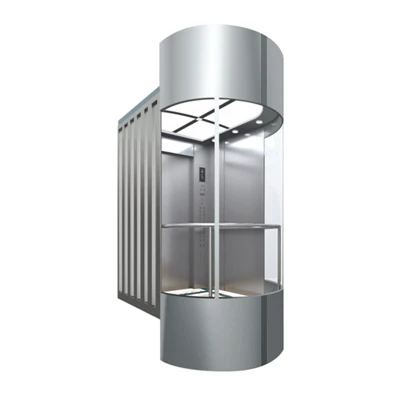
Stainless steel is the best material choice for passenger elevators, balancing safety, durability, and aesthetics. 304 or 316 models are especially recommended, as they excel in strength, corrosion resistance, and visual appeal.
Safety: High-strength, fire-resistant, and impact-resistant materials are preferred.
Stainless steel (304/316): Possesses excellent structural strength, effectively resisting external impacts, and is certified to safety standards such as EN 81-20. 316 stainless steel contains molybdenum, making it even more corrosion-resistant and suitable for coastal or humid environments.
High-strength steel guide rails: Ensure stable elevator operation and prevent the risk of car swaying or falling.
Tempered glass doors: Must meet safety interlayer standards, breaking into small particles to reduce the risk of cuts.
Safety Tip: All materials should comply with the national standard GB/T 7588.1-2020, possessing fire-resistant, anti-slip, and anti-electric shock properties. [Official website]
Durability: Corrosion Resistance and Low Maintenance are Key
Stainless Steel > Aluminum Alloy > Painted Steel Sheet
Stainless steel boasts strong corrosion resistance and a service life exceeding 15 years; aluminum alloys are lightweight but prone to oxidation; painted steel sheets are inexpensive but require regular touch-ups.
Surface Treatment Affects Lifespan: Brushed/Mirror Finishes Reduce Scratch Accumulation
Thickness is Recommended to be No Less Than 1.2mm to Enhance Deformation Resistance
Aesthetics: Matching Architectural Style and Enhancing Spatial Quality
Modern Minimalist Style: Mirror or Brushed Stainless Steel Offers Visual Transparency and Easy Cleaning
High-End Business/Hotel Style: Can be Paired with Glass + Metal Frame Designs to Enhance Lighting and Sophistication
Residential/Villa Style: Use Wood Veneer or Colored Coatings in Selective Areas to Create a Warm Atmosphere, but Ensure the Materials are Flame-Retardant.