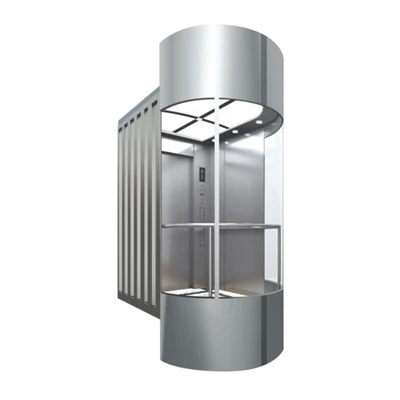
Your focus on modern elevator technology is very forward-thinking. These "invisible upgrades" are quietly improving our travel safety and efficiency. In fact, today's passenger elevators are no longer just simple lifting tools, but "vertical intelligent bodies" integrating intelligence, safety, and energy conservation.
The core new technologies of modern passenger elevators mainly focus on three areas: intelligence, safety monitoring, and energy conservation and environmental protection, making the elevator experience more efficient, safe, and green:
Destination Floor Reservation System (Intelligent Elevator Dispatch): Passengers enter their destination floor in the lobby, and the system automatically assigns the optimal elevator, enabling group transportation and significantly reducing the number of stops and waiting time. This system can improve elevator operating efficiency by 20%-30% and reduce energy consumption, and is widely used in high-rise office buildings and commercial centers.
IoT Remote Monitoring (Otis ONE®, Cloud Systems, etc.): Elevator operating data is collected in real time through sensors and a cloud platform to achieve fault warnings and preventative maintenance. For example, the Haina Cloud system can identify risks such as people trapped or electric vehicles entering the elevator, responding in seconds and linking rescue efforts, reducing rescue time by 40%. Similar "cloud-based elevator IoT systems" can also achieve contactless elevator access and remote management.
Energy Feedback and Energy Storage Technology: When the elevator is heavily loaded descending or lightly loaded ascending, the motor enters a generator state. Energy feedback devices can return electrical energy to the grid, achieving energy savings of 20%-45%. More advanced "energy storage recovery systems" use a hybrid energy storage system combining supercapacitors and batteries, achieving a recovery efficiency of over 95%. A single elevator can save 8,000-12,000 kWh of electricity annually, achieving energy savings exceeding 40%.
Contactless Operation and Intelligent Epidemic Prevention Systems: To reduce cross-infection, modern elevators are equipped with non-touch call systems, such as foot control buttons, gesture recognition, mobile app, or Bluetooth-enabled automatic floor selection. Some systems also integrate air purification and negative ion sterilization functions, removing over 99% of viruses and odors in real time.
AI Visual Safety Monitoring: Equipped with an AI camera, it intelligently identifies abnormal behaviors such as electric vehicles entering the elevator, prolonged door blocking, and passenger falls, automatically issuing voice alarms and stopping the elevator, eliminating safety hazards at the source. The recognition accuracy rate reaches over 98%.
Ultra-High Speed and Low Noise Operation Technology: Utilizing a 9-phase synchronous traction machine and an aerodynamic cabin car design, it reduces wind resistance and vibration, achieving smooth high-speed operation and improving passenger comfort by 40%. It is also equipped with a three-stage hydraulic buffer and a ceramic emergency braking device to ensure safe braking at high speeds.
Twin Elevators and Magnetic Levitation Technology (Future Trend): Two independently operating cars are placed in the same shaft, doubling the carrying capacity; while magnetic levitation elevators eliminate steel cables, using linear motor drives, reaching speeds of up to 20m/s, representing the future direction of vertical transportation in high-rise buildings.